Capabilities and Specialized Equipment
The following electrostatic testing, measurement, and analyses can be performed in high and low temperatures, pressures, humidity and at various atmospheric conditions:
- Surface resistivity measurements
- Charge decay measurements
- Triboelectric charge measurements
- Volume resistivity measurements of solids, liquids, and powders
- Adhesion coefficient determination
- Electric field measurements
- Surface charge distribution measurements
- Surface analysis techniques
- Embedded electrostatic sensors
- Plasma treatment of surfaces
- Electrospraying of liquids
- Hydrophobicity and contact angle measurements
- Electrical conductivity and grounding determination
- Dielectric breakdown strength determination
- Powder or liquid aerosol generation and measurement
- Radiofrequency (RF) emission detection from electrostatic discharge
- Charged grain detection and measurement
- Corona discharge, brush discharge, and Paschen breakdown measurements
- Liquid conductivity and powder resistivity measurements
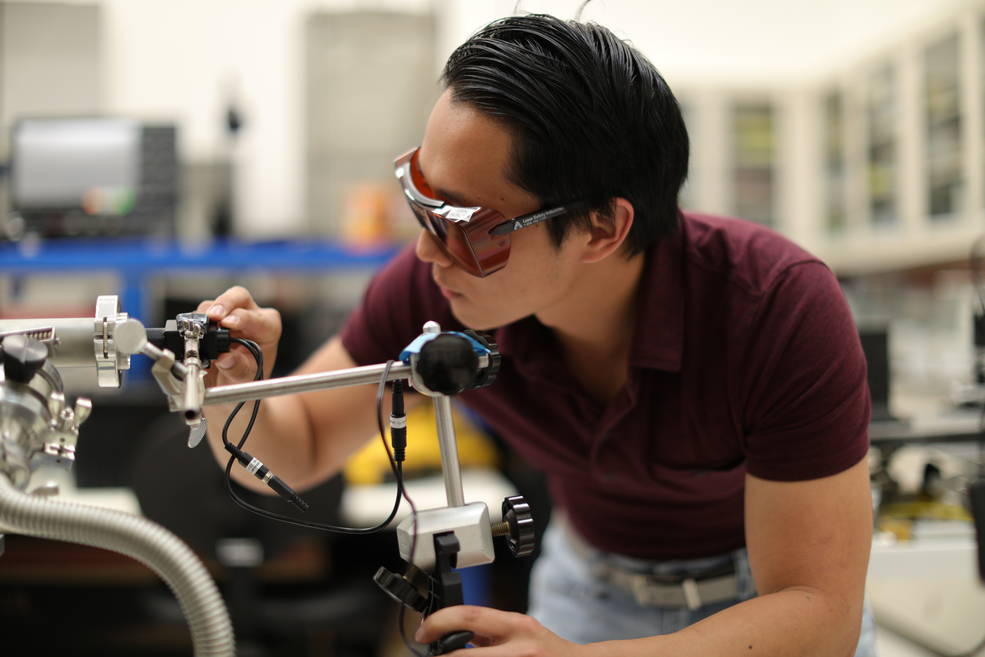
- Laser Etching
- Susceptibility testing via Charged Device Model (CDM), Machine Model (MM), and Human Body Model (HBM)
- Lunar/Mars Vacuum Chamber
- Various vacuum systems (2 bell jars, 1 stainless-steel UHV-capable)
- Three environments chambers with stat-of-the-art electrostatic measuring equipment (static monitors, charge decay, coulomb meters)
- State-of-the-art Electrostatics Testing Equipment Atmospheric plasma
- Glow discharge sources
- Ultraviolet source and monochromator
- Optical emission spectrometer
- Sample preparation facilities
- Lunar and Mars dust simulants and 200 grams Apollo 14, 16, and 17 lunar regolith
- Vacuum electron/ion/ultraviolet sources for producing spacecraft charging environments
- High speed/low noise current amplifiers for monitoring small currents
Keep Exploring