April 22, 2026
Earth Day 2026
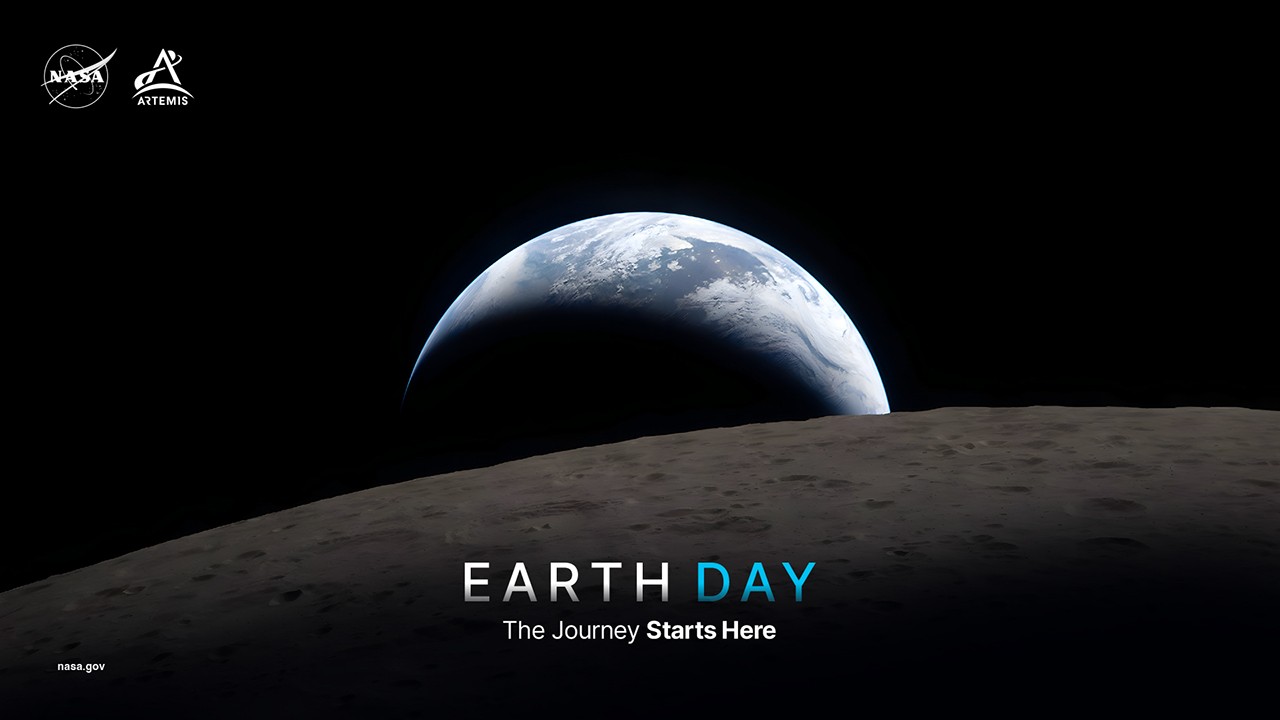
On April 6, 2026, shortly before Earth slid behind the Moon from the perspective of Orion, and the spacecraft lost radio signal with mission control for 40 minutes, the Artemis II crew captured this stunning image of Earth setting over the lunar surface. The photo is reminiscent of the iconic 1968 Earthrise image, captured by Apollo 8 astronaut Bill Anders during the first human journey around the Moon. As the astronauts flew over the Moon’s far side, the crew photographed and described terrain features including impact craters, ancient lava flows, and surface cracks and ridges formed as the Moon slowly evolved over time. They also noted differences in color, brightness and texture, which provide clues that help scientists understand the composition and history of the lunar surface. The image has been slightly sharpened to fit the format of the poster.
2026 Earth Day Poster (print resolution, CMYK)
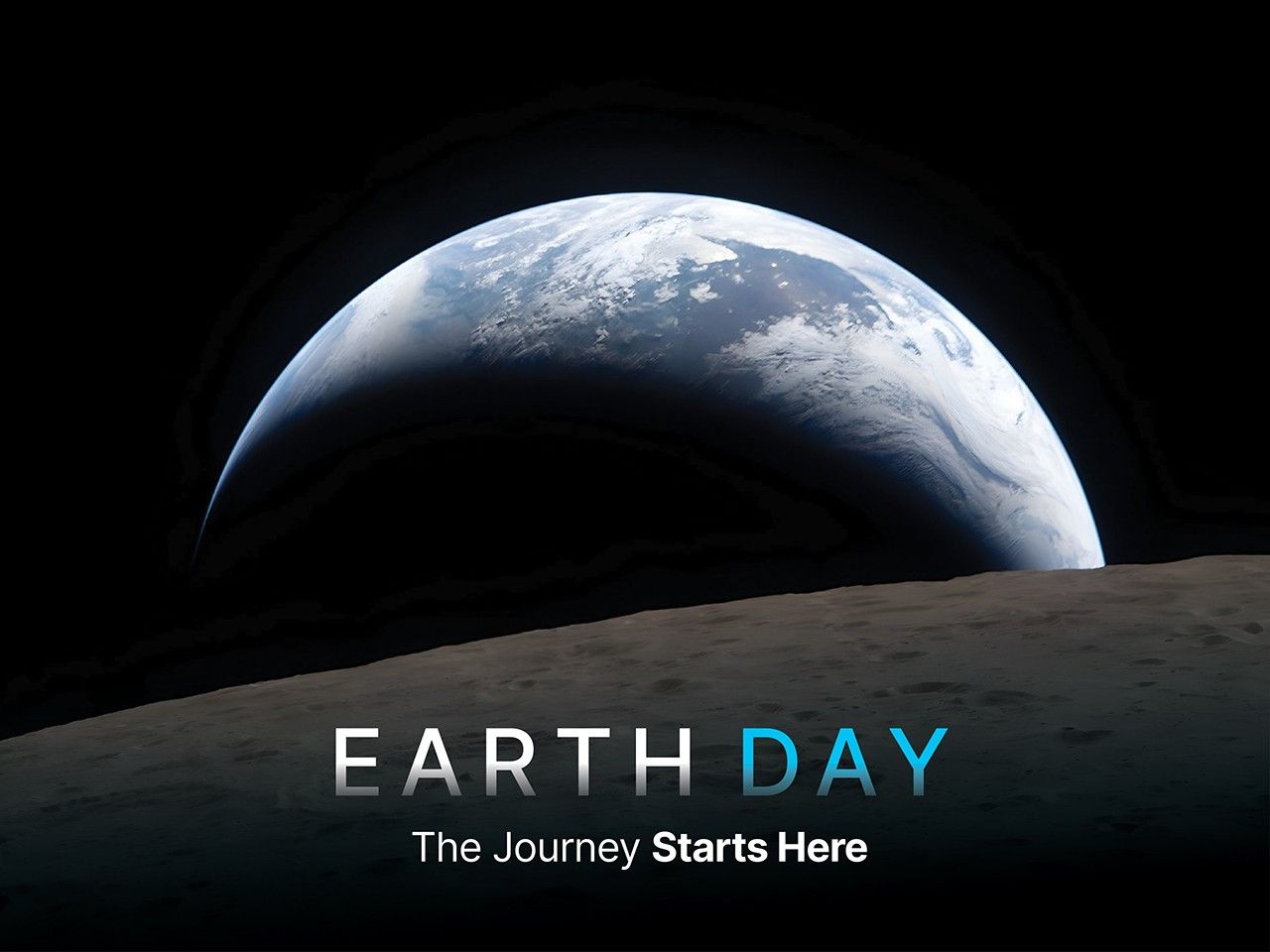
2026 Earth Day Poster (low resolution, 508 compliant)
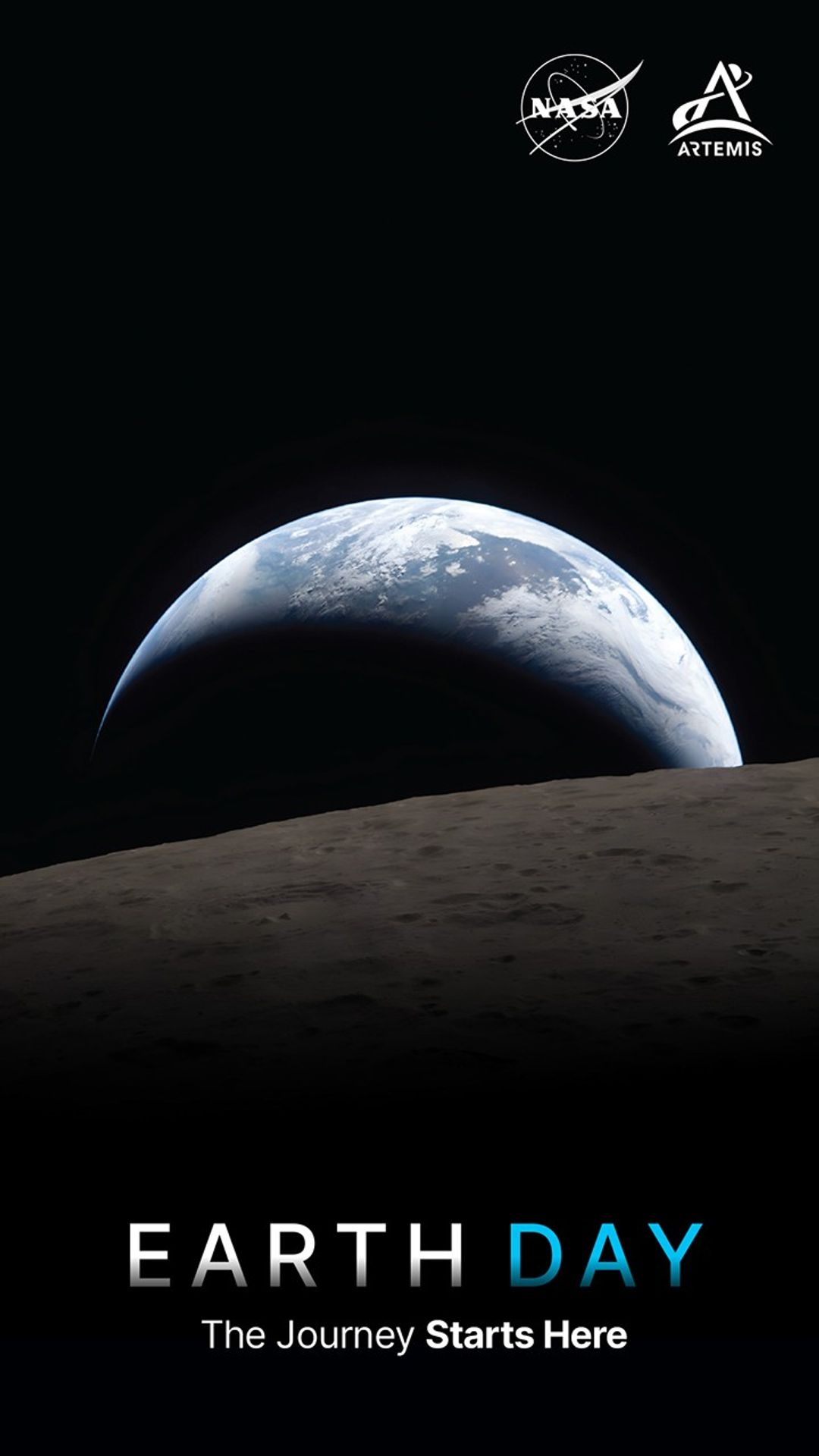
Póster del Día de la Tierra 2026 (resolución de impresión, CMYK)
Póster del Día de la Tierra 2026 (baja resolución, compatible con 508)
Download Virtual Backgrounds
Opciones de descarga de fondos de pantalla
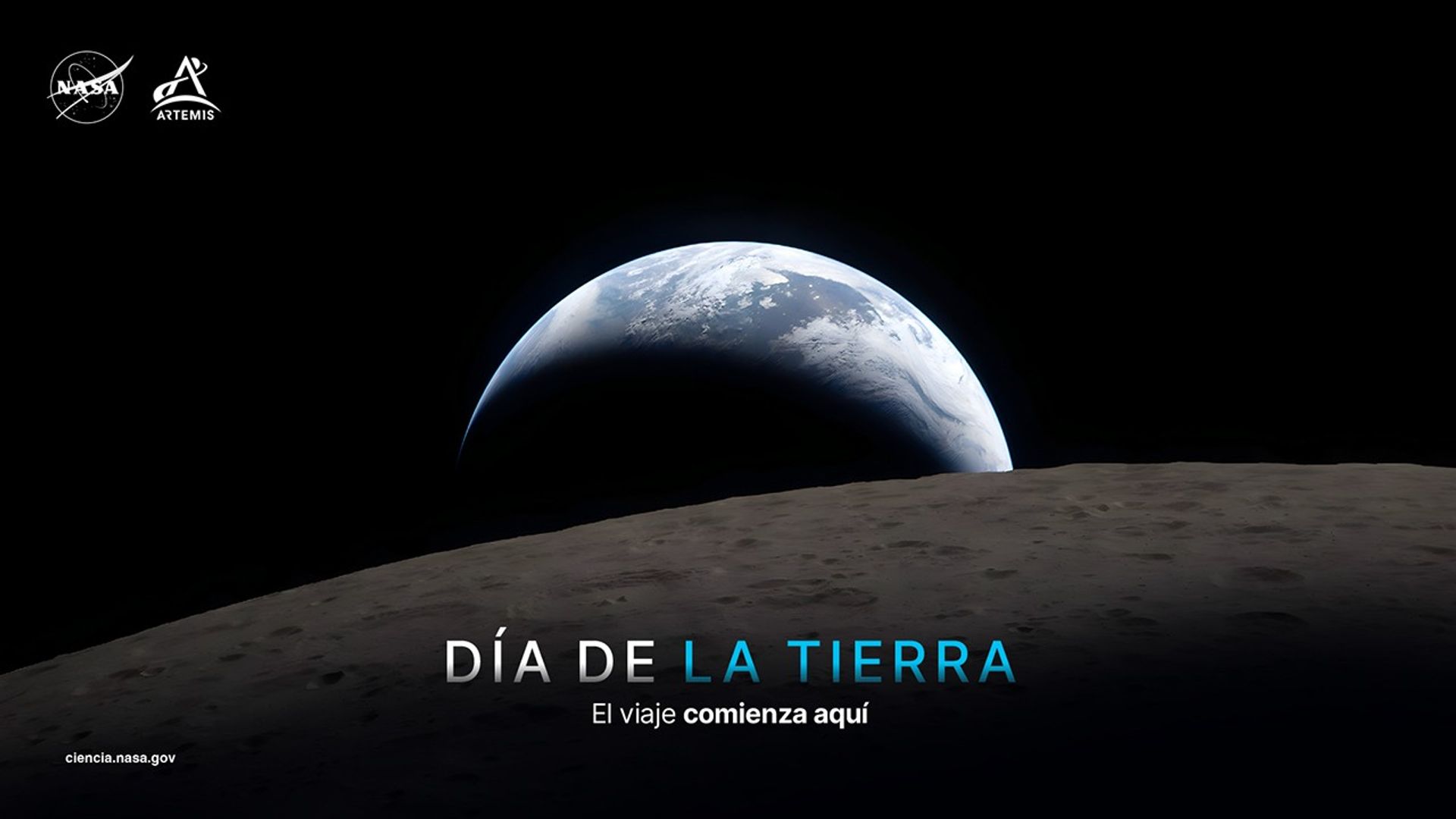
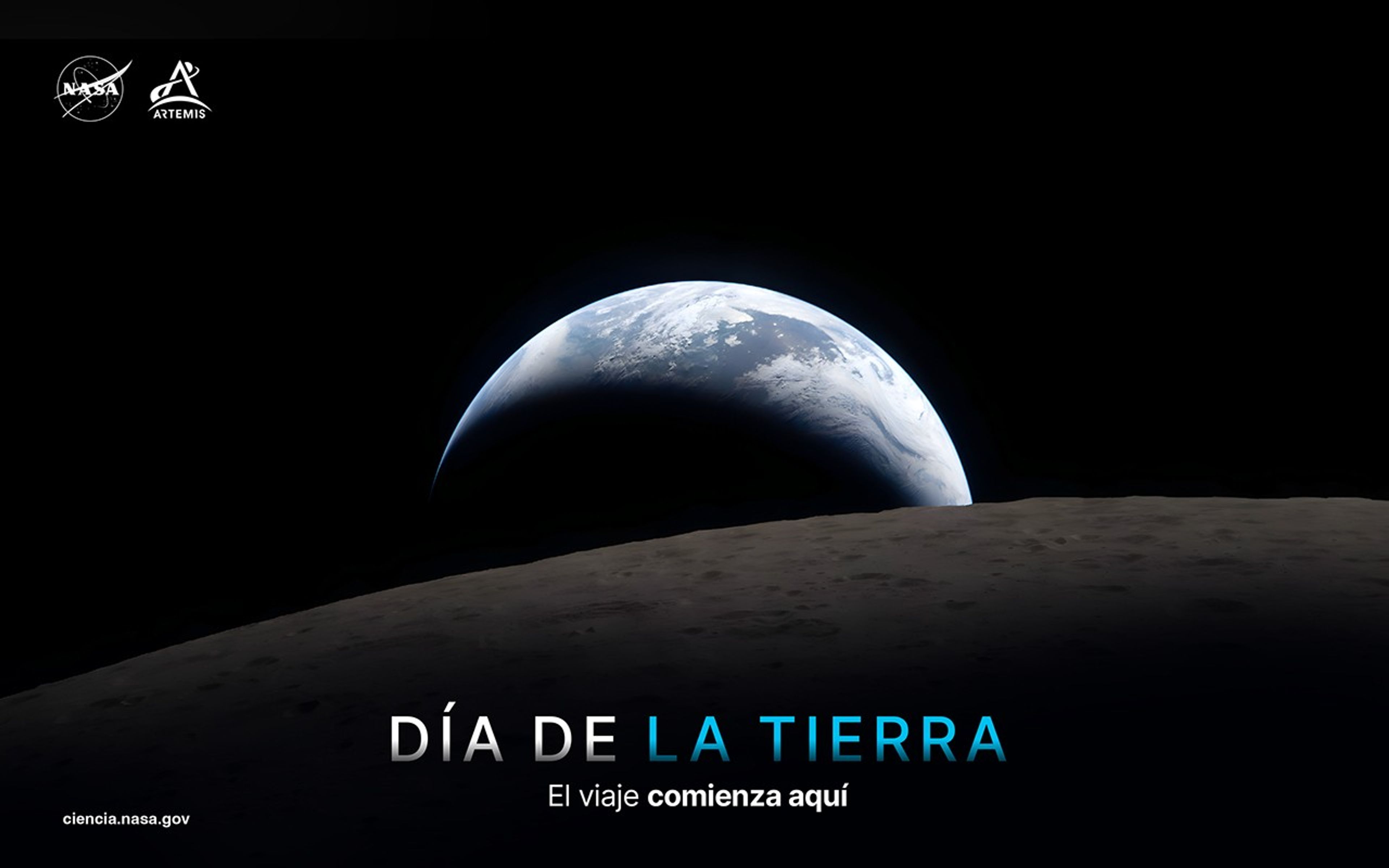
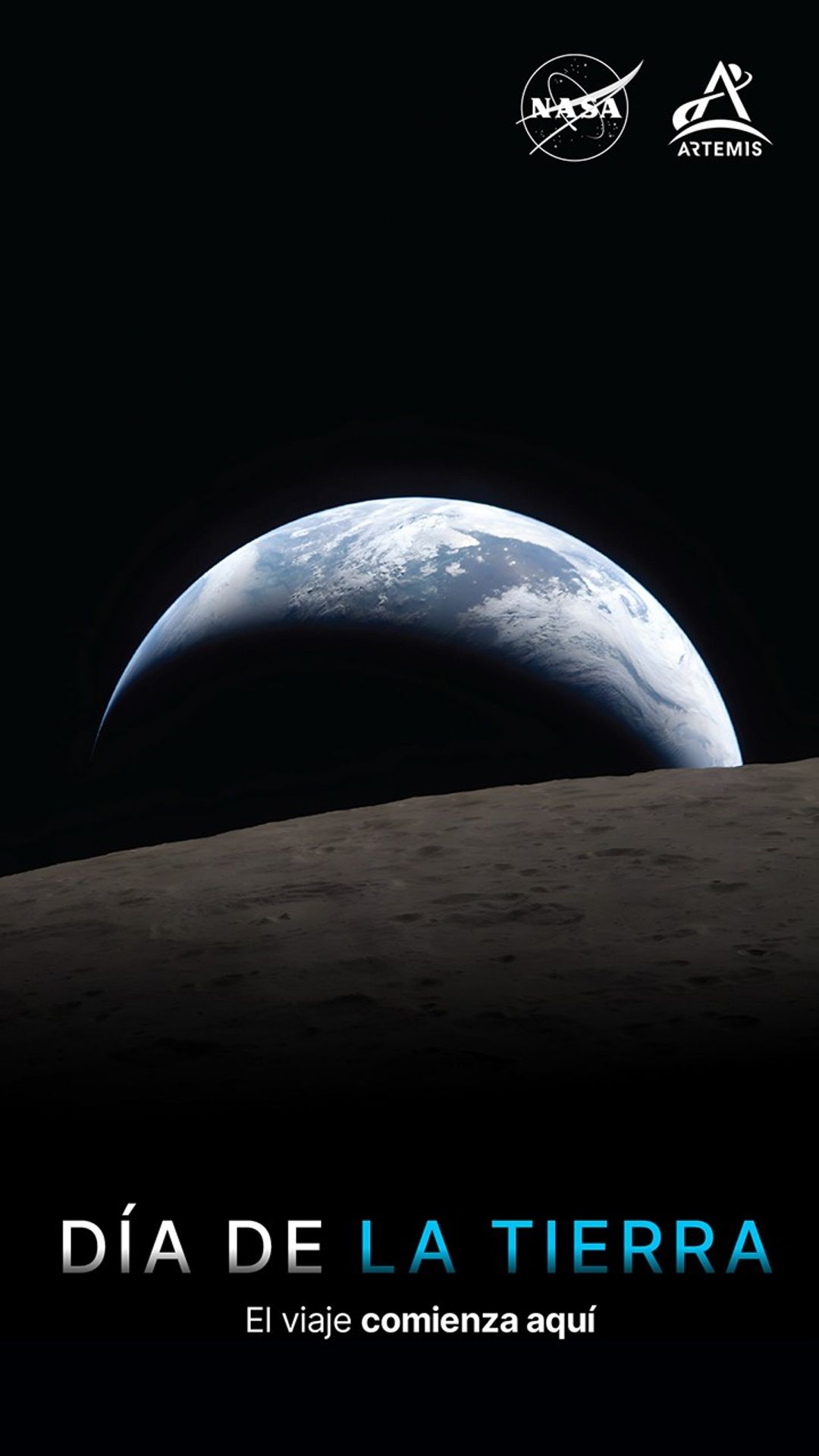
The Journey Starts Here
-
Earth from Lunar Orbit
On April 6, 2026, shortly before Earth slid behind the Moon from the
perspective of Orion, and the spacecraft lost radio signal with mission
control for 40 minutes, the Artemis II crew captured this stunning image of
Earth setting over the lunar surface. The photo is reminiscent of the iconic
1968 Earthrise image, captured by Apollo 8 astronaut Bill Anders during the first human journey around the Moon. -
APOLLO 8
This is the original “Earthrise” image, taken as the crew of Apollo 8 orbited the Moon on December 24, 1968. This image of Earth as a distant world over the Moon’s horizon has been credited as inspiration for the first ever Earth Day in 1970. “THE VAST LONELINESS IS AWE INSPIRING, AND IT MAKES YOU REALIZE JUST WHAT YOU HAVE BACK THERE ON EARTH,” Apollo 8 Command Module Pilot Jim Lovell said during a live broadcast from space that night.
-
APOLLO 17
Nearly the entire coastline of Africa is clearly visible, along with the Arabian Peninsula, in this breathtaking view of Earth, captured during the Apollo 17 mission’s journey to the Moon on Dec. 7, 1972. This marks the first time astronauts were able to photograph the South polar ice cap.
-
ARTEMIS II
This nighttime picture of Earth was taken on April 2, 2026, by an Artemis II crew member aiming a camera through a window of the Orion spacecraft. The image was captured after Orion completed its translunar injection burn, the critical maneuver that sent the spacecraft on its path toward the Moon and back. Africa is visible on the left, while a translucent cone of light capped by a bright Venus extends into space from Earth’s lower right edge.
LANDSAT
More to Celebrate
With NASA’s “Your Name in Landsat” online interactive, users can type in their name, then view and export the graphic of that name spelled out in Earth features found in Landsat images.
Earth Science At NASA
NASA is an exploration agency, and one of our missions is to know our home. For more than 60 years, NASA has developed cutting edge sensors and techniques for understanding how our planet works – for the benefit of humanity and for insights we need to explore other moons and planets. NASA’s Earth Science Division operates more than 20 satellites in orbit, sponsors hundreds of research projects and studies, and funds opportunities to put data to use for societal needs. We develop new ways to observe the oceans, ice, atmosphere, life, and land cover. NASA research on Earth’s land surfaces have led to innovations in monitoring crops, forests, and water resources; in responding to hazards such as wildfires and landslides; and in observing how Earth’s landscapes are changing.
While engaging with industry leaders, international partners, academic institutions, and other users of our data, we drive innovations and deliver science to help inform decisions that benefit the nation and the world.
Keep Exploring