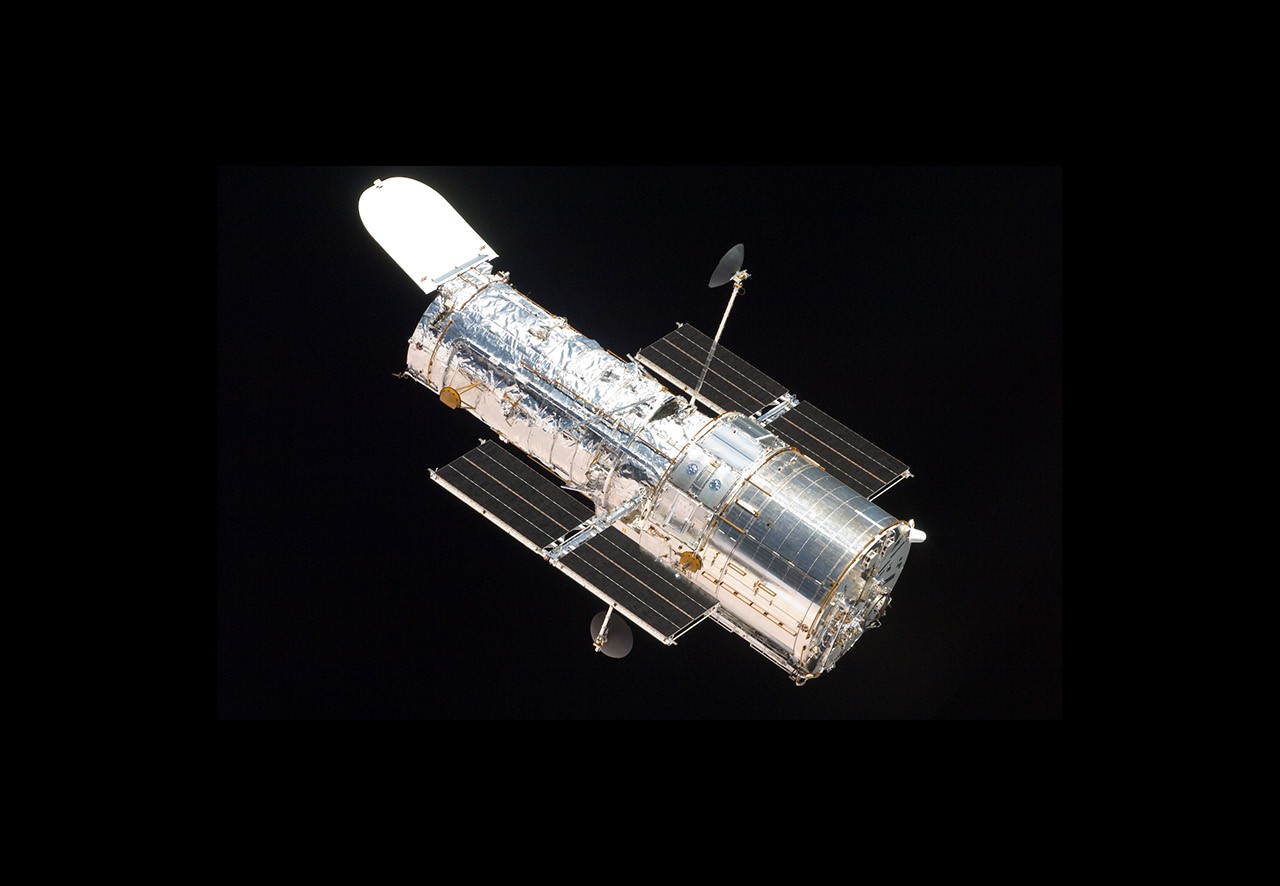
NASA’s Hubble Space Telescope commemorates the nation’s 250th birthday with a fireworks display in the colors of the cosmos. Enjoy this collection of images captured on July 4th over Hubble’s 36-year history.
As one of the most iconic and historic missions of the United States’ space program, Hubble’s story is woven into the fabric of American life. Hubble images populate movies and television shows, the pages of science textbooks and classroom posters, and even items of daily life like coffee mugs and socks.
Each of the 13 images below, ranging from 1990-2025, contain data taken on a Fourth of July. But these pictures represent an extremely small portion of Hubble’s more than 1.7 million observations. From these observations, astronomers have published more than 23,000 peer-reviewed scientific papers on Hubble discoveries, making Hubble one of the most prolific astronomical instruments in history.
Now in its 37th year in orbit, Hubble has far exceeded its 15 year expected lifespan and continues to spur our imaginations with beautiful images and groundbreaking science, further inspiring our desire to explore and learn more.
The image collection you see here represents a small sample of nearly 3,500 Hubble data sets captured on July 4th for the first 36 years of Hubble’s time in orbit. These data sets include more than 2,500 scientific observations and nearly 1,000 instrument calibrations that allow astronomers to correct the raw data for electrical and thermal noise, non-uniform sensitivity across its detectors, and other random signals that can skew the data. Of the scientific observations, nearly 2,000 are images taken with Hubble’s cameras and roughly 500 are spectra taken with Hubble’s spectrographs. Note that three of Hubble’s cameras — Advanced Camera for Surveys, Wide Field Camera 3, and the Near Infrared Camera and Multi-Object Spectrometer — also have spectrographic capabilities that allow astronomers to capture an image along with detailed data about the object’s light.