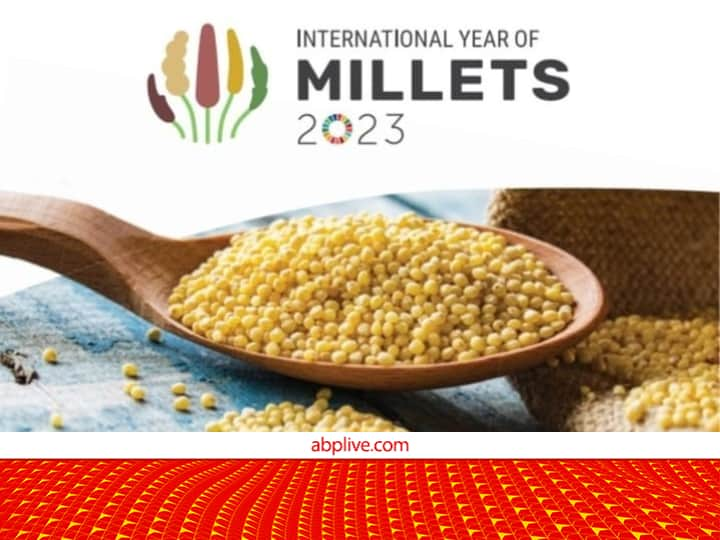
Millet Cultivation: The whole world is celebrating the year 2023 as the International Year of Nutritious Cereals. For many, the words Millet, Mota Anaj or Shree Anna would be completely new, but in India, coarse grains are being grown since ages. Its description is found in many Puranas. Many generations of farmers are growing coarse grains in different areas of the country, although coarse grains had disappeared from our plates amidst the increasing consumption of wheat and rice in modern times, but now efforts are on to bring them back. Our country has the title of the largest production of coarse grains, but in the last few years the consumption is very low, to increase which awareness campaigns are being run.
Lakhs of farmers of the country are also joining the millet campaign and are getting good income by growing coarse grains at low cost. Recently, coarse grains have been recognized as Mr. Anna. Today we will introduce you to such a farmer, who is playing an important role in increasing the utility of coarse grains in the country.
23 quintal production from 4 bigha farm
Malihabad, which is famous for mango production in UP, is becoming famous for Shree Anna. Randhir Singh, a farmer of Bhatoiya village here, has become a topic of discussion because of the maximum production of jowar from his 4 bighas of land.
According to the news, every year Randhir Singh grows jowar on his 4 to 5 bighas of land, due to which 22 family members are being nurtured. Randhir, who has been doing traditional farming for years, says that the cost of sorghum cultivation is one-fourth that of wheat and paddy and the benefits are much more.
He says that this farming earns a good income, taking inspiration from which other farmers of the village are also turning to jowar production.
Jowar is sold at this price
Mr. Annadata Randhir Singh says that he had sown jowar on his four bighas of land in June last year, after which the crop ripened and was ready for harvesting in the first week of October. There are also two ways to sell this produce, when the government does not buy, jowar is sold in the open market at the rate of Rs 18 to 20 per kg.
Last year also Randhir Singh sold 20 quintals of jowar and has also preserved some seeds for the next cultivation. These seeds are also sold in the market at Rs.80 to 100 per quintal.
Randhir Singh says that if the government gives financial incentives, then it is also ready to increase the area of jowar. Please tell that Jowar, Bajra, Maize are cultivated in Rabi season i.e. winter and it is also consumed in winter.
Shree Anna’s effect is hot, so it is rarely consumed in summer, but millet grains and fodder serve as a balanced diet for animals throughout the year.
What is the government’s plan regarding Shree Anna
In the budget 2023-23, coarse grain has been recognized as Shri Anna. Shri Anna Yojana has also been started to increase its production and consumption. On the proposal of India, the United Nations year 2023 has been declared as International Millet Year.
Now the main focus of the government is to encourage millet production as well as its use, for which improved seeds of millet will be distributed free of cost to farmers in different states within the next 5 years.
Purchase centers will be marked in every block for the purchase of Shree Anna, so that the farmers do not face any kind of problem in the sale. Although the production cost of millet is less, but there is a plan to organize scientific workshops to increase the production. In Kisan Pathshalas also, there is a plan to spread information about scientific cultivation of coarse grains to the farmers from training to storage.
Disclaimer: Some of the information given in the news is based on media reports. Farmer brothers, before implementing any suggestion, do consult the concerned expert.
Read this also- 60 percent subsidy on solar power pump to farmers, 59,000 farmers took advantage, you also apply