There are roughly 200 confirmed impact structures on Earth, but geologists estimate that hundreds more lurk undiscovered. Now, there’s at least one more—and a large one, at that—in the confirmed bin, spotted by an amateur astronomer planning a camping trip to Quebec.
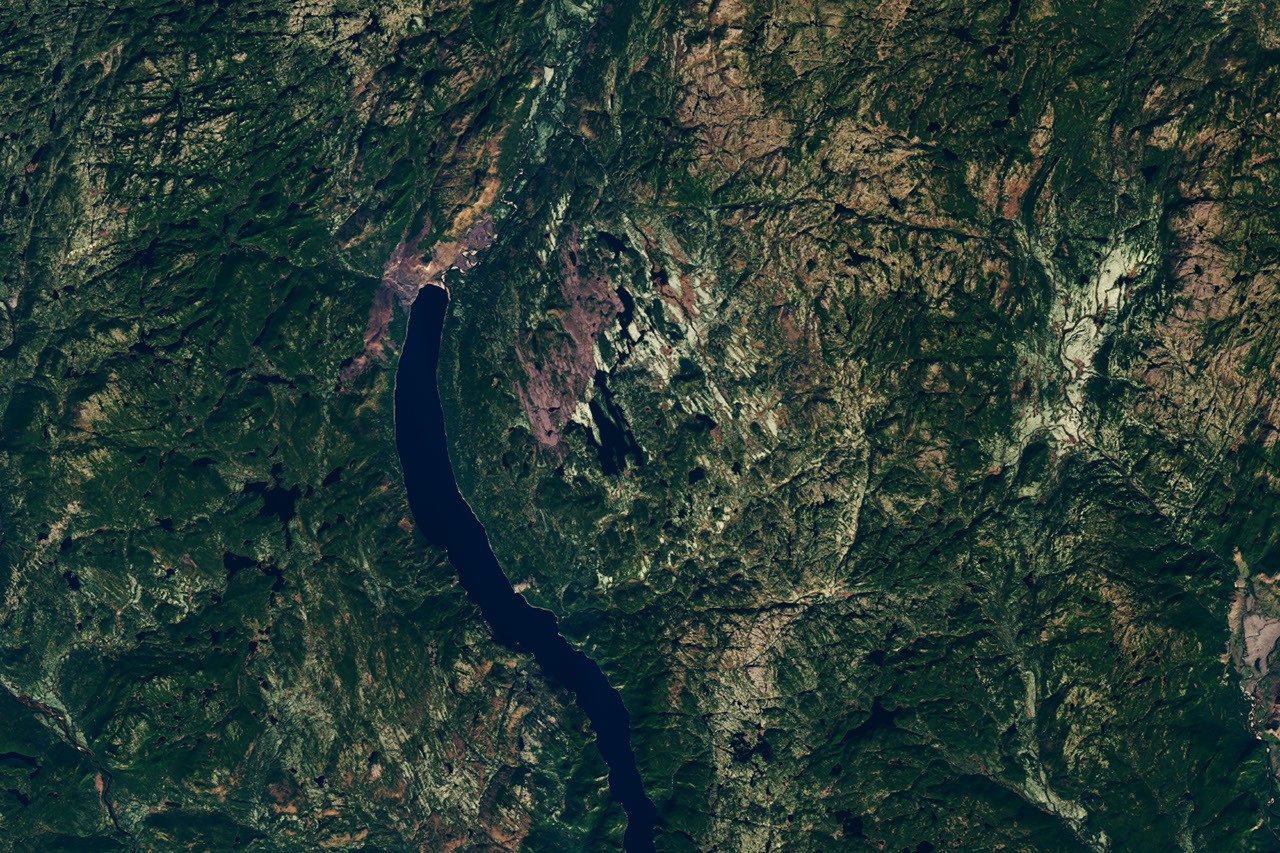
In 2024, Joël Lapointe was prepping for a camping trip to the remote Côte-Nord region when he noticed a circular feature in online satellite maps near Lake Marsal. Suspecting that the depression might be an impact crater, he contacted experts in both Europe and North America.
His questions led a team of French researchers to list the lake area as the center of a possible 11th-known impact structure in Quebec at a meeting of the Meteoritical Society in 2024—which eventually led to the involvement of Gordon Osinski, a planetary geologist at Western University and director of the Impact Earth database. Osinski was initially skeptical. But with his curiosity piqued, he decided to organize an expedition to the remote site in October 2025 to investigate.
Osinski and colleagues arrived by floatplane and quickly found themselves in unforgiving terrain. The plane couldn’t reach the shore, and the researchers had to wade across 50 meters (165 feet) of water to reach land while laden with gear. The terrain, meanwhile, was rugged, swampy, teeming with bugs, and covered by what Osinski described as “deep, twisty, gnarly vegetation.” Despite having conducted extensive fieldwork on six continents, he described the conditions as among the most challenging he had ever experienced.
Previous geologic mapping suggested that the breccia rocks in the area were the product of a funnel-shaped volcanic feature known as a diatreme—a pipeline of fragmented rock formed by explosive eruptions of magma. Yet by the second day, the researchers had identified distinctive features called shatter cones in many rock outcrops—a sign that the structure was actually an impact crater. “It’s the only unequivocal evidence of an impact event that you can see in the field with the naked eye,” Osinski said.
The object that struck was large enough to create a complex crater structure that spanned 25 kilometers (16 miles), complete with a central uplift and tall cliffs marked by columnar jointing. Were an object of a similar size to strike Quebec today, it would cause “regional devastation on a scale that would wipe out major cities and have global climate impacts,” Osinski said.
Rock samples indicated that the impact crater likely formed about 390 million years ago, about 100 million years before a surge in cratering on Earth that may be associated with collisions in the asteroid belt.
After consultations with the Innu Council of Ekuanitshit, the research team is calling the crater Uhackatik. While the team considers the crater essentially confirmed, a Meteoritical Society committee is expected to formally recognize the site as an impact crater when it next meets. This is the largest impact crater discovered since the 31-kilometer Hiawatha structure was found in 2018.
Osinski is a member of NASA’s first Artemis Geology Team and helps astronauts with geology training, but he doesn’t expect to see astronauts at Uhackatik anytime soon because of how difficult it is to reach. There’s a younger, more accessible impact crater in Labrador—Kameshtashtan (also called Mistastin Lake)—where astronauts have done geology training in the past, he said.
For Lapointe, tipping off the scientific community to the new crater is something he’ll long remember. He told CityNews he was “over the Moon” when the researchers confirmed it was really a crater. “I encourage everyone to not ignore intuition or an observation, even if it isn’t part of your field of expertise,” he told another outlet.
Citizen scientists hoping to leave their mark on the science world have plenty of opportunities through NASA. With the Daily Minor Planet project, help look for asteroids and comets that might pose a risk to Earth. With Impact Flash, scour dark parts of the Moon for flashes caused by meteoroid impacts. And with Exoasteroids, hunt for signs of asteroids beyond our Solar System.
NASA Earth Observatory images by Lauren Dauphin using Landsat data from the U.S. Geological Survey. Photos by Gordon Osinski (Western University). Story by Adam Voiland.
- Cavosie, A.J., et al. (2026) Impact-diagnostic criteria for use in confirming a meteorite impact origin of terrestrial geological structures: Recommendations by the Impact Cratering Committee of the Meteoritical Society. Meteoritics & Planetary Science, 61(7), 1538-1565.
- CBC (2026, July 14) He saw a pit on Google Maps. It turned out to be a 390-million-year-old meteor crater. Accessed September 11, 2026.
- CityNews (2026, July 19) Pit found by Quebecer confirmed to be a 390-million-years-old meteorite impact crater. Accessed September 11, 2026.
- Gattacceca, J., et al. (2026) Uhackatik: A new 25-km diameter ~390 ma impact structure in Quebec, Canada. The 88th Annual Meeting of the Meteoritical Society.
- Hergarten, S. & Kenkmann, T. (2015) The number of impact craters on Earth: Any room for further discoveries? Earth and Planetary Science Letters, 425, 187-192.
- Impact Earth, Map of Impact Craters and Deposits. Accessed September 11, 2026.
- Kenkmann, T. (2021, June 30) The terrestrial impact crater record: A statistical analysis of morphologies, structures, ages, lithologies, and more. Meteoritics & Planetary Science, 56(5), 1024-1070.
- NASA (2019, January 17) NASA’s Moon Data Sheds Light on Earth’s Asteroid Impact History. Accessed September 11, 2026.
- NASA (2023, August 22) NASA Selects Geology Team for the First Crewed Artemis Lunar Landing. Accessed September 11, 2026.
- Rochette, P. (2024) Lake Marsal: a large impact structure candidate in Quebec (Canada). The 86th Annual Meeting of the Meteoritical Society.
- Smithsonian (2026, July 21) An Amateur Astronomer Using Google Maps Spotted a Strange Indentation. It Turned Out to Be a Meteorite Crater From 390 Million Years Ago. Accessed September 11, 2026.
- Space.com (2026, July 21) A massive crater was spotted on Google Earth. It could be a scar from an ancient meteorite impact. Accessed September 11, 2026.