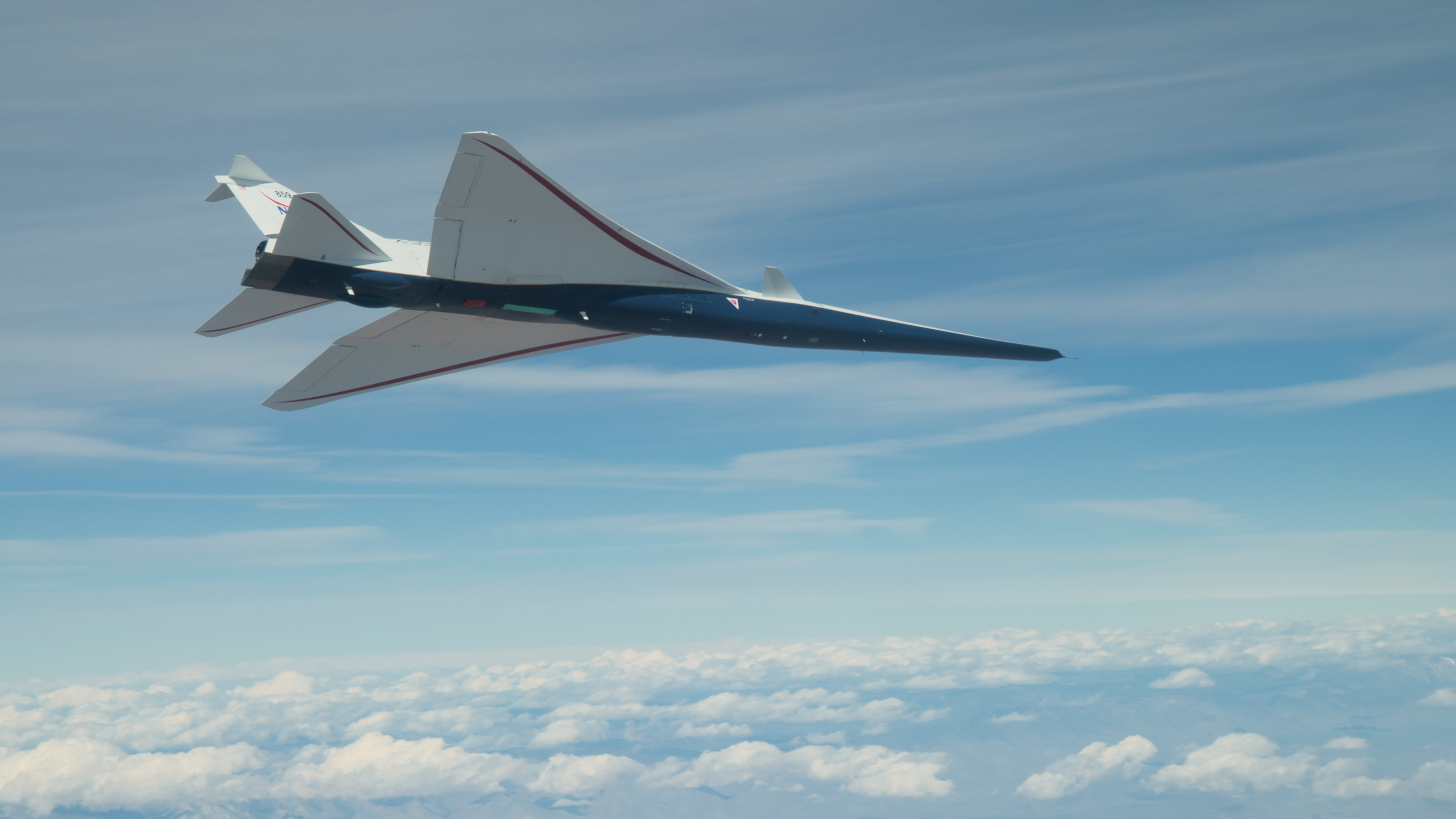
The envelope expansion phase of any experimental aircraft is critical, not just for pushing the aircraft higher and faster, but for understanding how the aircraft operates in flight.
As NASA’s X-59 experimental aircraft makes progress through its envelope expansion, the team is assessing data collected during specific maneuvers performed by the X-59’s pilot in flight.
This gives engineers important insight into the aircraft’s performance, looking at structural dynamics, loads, and flight controls performance. We describe some of the X-59’s flight test maneuvers during its first block of test flights here:
- A rollercoaster maneuver involves a sequence of pitching the aircraft up and down to better understand aerodynamic forces and characterize stability and control.
- A bank‑to‑bank maneuver is when an aircraft gently rolls from one side to the other, such as tipping its wings right, then smoothly rolling back through level and over to the left.
- A flutter excitation maneuver introduces deliberate vibrations into the aircraft’s structure during flight to ensure the aircraft’s flutter boundaries are well understood and that its structure maintains safe margins across the flight envelope.
- A wings-level push maneuver is a controlled, wings-level pitch-down movement used to evaluate the aircraft’s longitudinal stability, pitch response, and trim characteristics at a given test condition.
- A gear-extend maneuver includes extending the aircraft’s landing gear at a controlled airspeed and configuration so engineers can measure the aerodynamic, structural, and handling qualities of the gear deployment, which can cause sudden changes in drag, pitch, vibration, and airflow. The landing gear retraction was tested as part of X-59’s first block of envelope expansion test flights.
AERONAUTICS RESEARCH MISSION
Quesst
Quesst is the name of NASA Aeronautics’ mission to help take the first step toward enabling commercial, faster-than-sound air travel over land. The centerpiece of the mission is NASA’s X-59 research aircraft. The experimental supersonic jet is designed with technology that reduces the loudness of a sonic boom to a gentle thump. NASA will fly the X-59 over select U.S. communities and take surveys to record what people think of the quieter sonic thumps. The human response data will be delivered to U.S. and international regulators, who will consider setting new rules that allow supersonic flight over land.