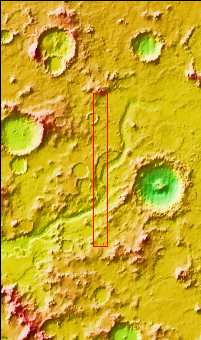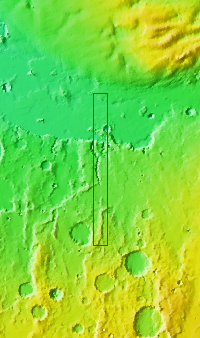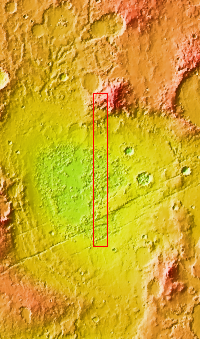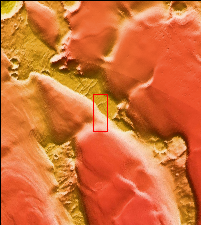
2-5, 6-8 Mystery Planet. In this lesson (90 minutes), students use samples of crustal material to sort, classify, and make observations about an unknown planet. In this 5E activity, students step into the shoes of real planetary scientists. From their observations, students interpret the geologic history of their mystery planet. Arizona State University/NASA. http://marsed.asu.edu/mystery-planet
4-12 Finding Life beyond Earth, Activity 6: Where to Look for Life (page 29). Students examine environment cards that describe planets and moons in terms of their temperature and atmosphere and the availability of water, energy, and nutrients. They then select the best candidates to search for life. https://d43fweuh3sg51.cloudfront.net/media/assets/wgbh/nvfl/nvfl_doc_collection/nvfl_doc_collection.pdf
5-8 Astrobiology in Your Classroom: Life on Earth…and Elsewhere. Activity 5: Is there life on other worlds? Page 49. In activity 5, students consider the possibility of life—simple and technological—in our galaxy by looking at the size and composition of our galaxy. Using the Drake Equation, students identify what information they would need to determine the probability of extraterrestrial life. NASA . https://assets.science.nasa.gov/content/dam/science/psd/astrobiology/learning/Astrobiology-Educator-Guide-2007.pdf
5-8 Astrobiology in Your Classroom: Life on Earth…and Elsewhere. Activity 4: What can life tolerate? Page 37. In activity 4, students identify the range of terrestrial life. The activity includes matching extremophiles to their habitat and debating the ethics of sending Earth life to other worlds. NASA . https://assets.science.nasa.gov/content/dam/science/psd/astrobiology/learning/Astrobiology-Educator-Guide-2007.pdf
6-8 SpaceMath Problem 61: Drake’s Equation and the Search for Life…sort of! In this simplified version, your students get to review what we now know about the planetary universe, and come up with their own estimates. The real fun is in doing the research to track down plausible values (or their ranges) for the factors that enter into the equation, and then write a defense for the values that they choose. Lots of opportunity to summarize basic astronomical knowledge towards the end of an astronomy course, or chapter. [Topics: decimal math; evaluating functions for given values of variables] https://spacemath.gsfc.nasa.gov/astrob/2page18.pdf
6-8 SpaceMath Problem 391: Investigating the atmosphere of Super-Earth GJ-1214b. Students investigate a simple model for the interior of an exoplanet to estimate the thickness of its atmosphere given the mass size and density of the planet. [Topics: graphing functions; evaluating functions for given values; volume of a sphere; mass = density x volume] https://spacemath.gsfc.nasa.gov/astrob/7Page55.pdf
6-8 SpaceMath Problem 335: Methane Lakes on Titan. Students use a recent Cassini radar image of the surface of Titan to estimate how much methane is present in the lakes that fill the image, and compare the volume to that of the freshwater lake, Lake Tahoe. [Topics: estimating irregular areas; calculating volume from area x height; scaled images] https://spacemath.gsfc.nasa.gov/planets/6Page148.pdf
6-8 SpaceMath Problem 403: The Goldilocks Planets – Not too hot or cold. Students use a table of the planets discovered by the Kepler satellite, and estimate the number of planets in our Milky Way galaxy that are about the same size as Earth and located in their Habitable Zones. They estimate the average temperature of the planets, and study their tabulated properties using histograms. [Topics: averaging; histogramming] https://spacemath.gsfc.nasa.gov/astrob/7Page66.pdf
6-9 Project Spectra: Planet Designer: Martian Makeover. This is an activity (two 50-minute lessons) about the atmospheric conditions (greenhouse strength, atmospheric thickness) Mars needs to maintain surface water. Learners use a computer interactive to learn about Mars past and present before exploring the pressure and greenhouse strength needed for Mars to have a watery surface as it had in the past. This lesson is part of Project Spectra, a science and engineering education program focusing on how light is used to explore the Solar System. University of Colorado, Boulder/NASA. http://lasp.colorado.edu/home/wp-content/uploads/2013/06/martian_makeover_teacher_20130617.pdf http://lasp.colorado.edu/home/education/k-12/project-spectra/
6-12 (3-5 adaptable) Project Spectra! – Goldilocks and the Three Planets. In this lesson (two class periods), students determine what some of Earth, Venus, and Mars’ atmosphere is composed of and then mathematically compare the amount of greenhouse gas and CO2 on the planets of Venus, Earth, and Mars, in order to determine which has the most. Students brainstorm to figure out what things, along with greenhouse gases, can affect a planet’s temperature which can determine its habitability. University of Colorado, Boulder/NASA. http://lasp.colorado.edu/home/wp-content/uploads/2011/08/Goldilocks.pdf
http://lasp.colorado.edu/home/education/k-12/project-spectra/
6-12 (3-5 adaptable) Project Spectra! Using Spectral Data to Explore Saturn and Titan. In this lesson students compare known elemental spectra with spectra of Titan and Saturn’s rings from a spectrometer aboard the NASA Cassini spacecraft. Titan is one of the most interesting planetary bodies in the search for life beyond Earth. Students identify the elements visible in the planetary and lunar spectra. University of Colorado, Boulder/NASA. http://lasp.colorado.edu/home/wp-content/uploads/2011/08/Using_Spectral_Data.pdf
http://lasp.colorado.edu/home/education/k-12/project-spectra/
6-12 (3-5 adaptable) Project Spectra! – Marvelous Martian Mineralology. In the Marvelous Martian Mineralogy lesson, students use reflectometers to determine which minerals are present (from a set of knowns) in a sample of Mars soil simulant. This rich activity can be done with data only, with ALTA ii reflectometers and real mineral samples or with computer simulation. Identifying minerals through spectrometry is a powerful tool in the search for life and the conditions for life in the solar system and beyond. University of Colorado, Boulder/NASA. http://lasp.colorado.edu/home/wp-content/uploads/2011/08/Marvelous_Martian_Mineralogy.pdf
http://lasp.colorado.edu/home/education/k-12/project-spectra/
6-12 (3-5 adaptable) Project Spectra! – Star Light, Star Bright? Finding Remote Atmospheres. Students explore stellar occultation events to determine if an imaginary dwarf planet “Snorkzat” has an atmosphere. Characterizing planetary bodies through spectrometry is a powerful tool in the search for life and the conditions for life in the solar system and beyond. University of Colorado, Boulder/NASA. http://lasp.colorado.edu/home/wp-content/uploads/2011/10/starlight_starbright_teacher.pdf
http://lasp.colorado.edu/home/education/k-12/project-spectra/
6-12 (3-5 adaptable) Project Spectra! – Enceladus, I Barely Knew You. In this activity, students establish whether Saturn’s small moon Enceladus has an atmosphere, whether the atmosphere encircles the whole moon, and whether it contributed to Saturn’s E-ring. Through data analysis students hypothesize attributes of Enceladus, a planet that has evidence of a water ocean under its icy crust. Characterizing planetary bodies through spectrometry is a powerful tool in the search for life and the conditions for life in the solar system and beyond. University of Colorado, Boulder/NASA. http://lasp.colorado.edu/home/wp-content/uploads/2011/10/Enceladus_knewyou_teacher.pdf
http://lasp.colorado.edu/home/education/k-12/project-spectra/
6-12 (3-5 adaptable) Project Spectra! – Planet Designer: What’s Trending Hot? This is a collection of 17 lessons ranging from 30 minutes to multi-week projects. In the activity (two 50-minute lessons) Planet Designer: “What’s Trending Hot?” students use a computer game format of a featureless planet to deduce what variables affect the temperature of the planet. They control the distance to the Sun, Albedo, Density, size and greenhouse gases. Using computer simulation is a powerful tool in the search for life and the conditions for life in the solar system and beyond. University of Colorado, Boulder/NASA. http://lasp.colorado.edu/home/wp-content/uploads/2013/06/TrendingHot_teacher_20130617.pdf
http://lasp.colorado.edu/home/education/k-12/project-spectra/
6-12 (3-5 adaptable) Project Spectra! – Planet Designer: Kelvin Climb? Students create a planet using a computer game and change features of the planet to increase or decrease the planet’s temperature. Students explore some of the same principles scientists use to determine how likely it is for a planet to maintain flowing water, a critical ingredient for life as we know it. Using computer simulation is a powerful tool in the search for life and the conditions for life in the solar system and beyond. University of Colorado, Boulder/NASA. http://lasp.colorado.edu/home/wp-content/uploads/2013/06/KelvinClimb_teacher_20130617.pdf
http://lasp.colorado.edu/home/education/k-12/project-spectra/
6-12 (3-5 adaptable) Project Spectra! – Planet Designer: Retro Planet Red. In this lesson, students learn about Mars’ past and present before exploring the pressure and greenhouse strength needed for Mars to have a watery surface as it had in the past. Water is a key ingredient for life. University of Colorado, Boulder/NASA. http://lasp.colorado.edu/home/education/k-12/project-spectra/
http://lasp.colorado.edu/home/wp-content/uploads/2013/06/Retro_Planet_Red_teacher_20130617.pdf
6-8 or 9-12 Question Mars. This three-hour standalone lesson is part of an exploration unit in Mars Student Imaging Project ( MSIP ). Students act as planetary geologists and learn about how to identify the geologic history of Mars with an eye toward its habitability. Students mirror the actions of planetary scientists as they follow their curiosity in order to create a researchable question that can be investigated through real scientific data/images. Arizona State University/NASA. http://marsed.asu.edu/msip-question-mars
6-12 Astrobiology Math. This collection of math problems provides an authentic glimpse of modern astrobiology science and engineering issues, often involving actual research data. Students explore concepts in astrobiology through calculations. Relevant topics include Lakes of Methane on Titan (page 53) and Heat Flow Balance and Melting Ice (page 47). NASA . https://www.nasa.gov/pdf/637832main_Astrobiology_Math.pdf
6-12 Science Fiction Stories with Good Astronomy & Physics: A Topical List: Life Elsewhere. The Astronomical Society of the Pacific created this list of short stories and novels that use more or less accurate science and can be used for teaching or reinforcing astronomy or physics concepts including plausible places for life beyond Earth.. https://astrosociety.org/file_download/inline/621a63fc-04d5-4794-8d2b-38e7195056e9
8-10 SpaceMath Problem 292: How Hot is That Planet? Students use a simple function to estimate the temperature of a recently discovered planet called CoRot-7b. [Topics: algebra II; evaluating power functions] https://spacemath.gsfc.nasa.gov/astrob/6Page61.pdf
8-10 SpaceMath Problem 264: Water on Planetary Surfaces. Students work with watts and Joules to study melting ice. [Topics: unit conversion, rates] https://spacemath.gsfc.nasa.gov/astrob/Astro3.pdf